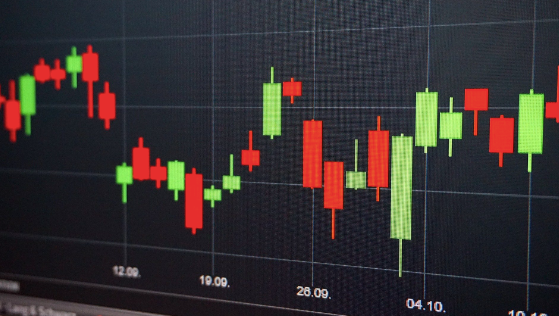
Candlestick patterns distill crypto price action into concise visual signals, emphasizing body size, wick reach, and color. They signal reversals, continuations, or momentum shifts when aligned with volume and trend context. The approach treats patterns as probabilistic clues rather than certainties, requiring careful weighting of market conditions. A disciplined framework—Spot, Confirm, Act—offers guardrails against noise and liquidity traps, but the edge remains contingent on evolving data and risk controls. The next step invites scrutiny of how these signals hold up under current market dynamics.
What Candlesticks Reveal in Crypto Price Action
Candlestick patterns distill complex price action into observable formations, offering a concise lens on market sentiment in crypto markets. They encode patterns psychology through body size, wicks, and color, signaling momentum shifts and trader risk tolerance. Analysts track volume and liquidity cues to validate signals, separating noise from credible moves. Conclusions remain probabilistic, guiding disciplined positioning and risk-aware decisions.
Key Patterns: Reversals, Continuations, and Momentum
Key patterns in crypto candlesticks capture the balance between supply and demand by delineating reversals, continuations, and momentum shifts.
The analysis emphasizes reversal psychology, where crowd sentiment pivots price, and momentum cues that signal sustained moves.
Traders assess pattern reliability, calibrate risk, and anticipate state changes, balancing empirical validation with speculative evaluation to define disciplined trading pathways.
Reading Volume and Trend Context Together
In assessing crypto price action, volume and trend context are read together to distinguish genuine momentum from transient moves;
high volume during a price advance, for example, strengthens the case for a sustainable uptrend, while similar volume on a pullback may indicate capitulation or distribution.
Volume interpretation informs trend context, shaping expectations about continuation or reversal with disciplined uncertainty.
Practical Trading Framework: Spot, Confirm, and Act
How can a trader translate candlestick signals into actionable steps without overfitting to noise? The Practical Trading Framework: Spot, Confirm, and Act, anchors decisions in observable patterns, corroboration, and risk controls. Spot signals during disorderly markets; Confirm with volume and trend filters to avoid false breaks. Act with predefined risk limits, recognizing liquidity traps and preserving capital under uncertain crypto conditions. Continuous evaluation essential.
Frequently Asked Questions
Do Candles Work Across All Crypto Exchanges Equally?
Yes, across most major venues, candles tend to align, though exchange consistency varies; liquidity impact and microstructure differences can skew signals. A cautious analyst notes possible divergences, emphasizing cross-exchange validation and disciplined risk management for freedom-seeking traders.
See also: How Technology Is Reducing Global Barriers
How Do News Events Distort Candlestick Signals?
News events distort candlestick signals by creating abrupt price moves that may not reflect underlying structure. News impact vs price action can diverge; liquidity driven distortions vs candlesticks reveal temporary imbalances, often exaggerating volatility while intraday trends persist beyond headlines.
Are There Best Timeframes for Crypto Candlesticks?
The answer: There is no single best timeframe; timeframeselection depends on strategy and volatility. Besttimeframes vary by asset and goal, with shorter frames offering precision and longer frames offering context, though results remain data-driven and cautiously speculative.
Can You Rely on Color Bias Alone for Decisions?
Reliability of color alone cannot guide decisions; bias minimization requires multi-factor analysis. The detached observer notes color cues may indicate momentum, but probabilistic signals demand volume, trend confirmation, and risk controls to avoid overreliance on visuals.
How Do Split or Forked Coins Affect Patterns?
Split coins and forked coins can complicate pattern reliability, introducing new supply dynamics and liquidity gaps; analysts adjust with normalization, backtesting, and cross-chain data. This speculative framework remains data-driven, yet seeks freedom from simplistic color bias. Hyperbolically nuanced.
Conclusion
In crypto price action, candlesticks offer a quiet lexicon of supply, demand, and evolving sentiment. Patterns hint at reversals, continuations, and momentum pivots, yet are tempered by volume and trend context. The disciplined reader weighs signals with probabilistic caution, avoiding overconfidence amid volatility. With a measured framework—Spot, Confirm, Act—traders navigate uncertainty, acknowledge latent risks, and position for measured outcomes. Ultimately, subtle patterns guide rather than guarantee, inviting prudent, data-informed interpretation in an uncertain market landscape.